Data Analytics
From Guesswork To Clarity: Designing Dashboards That Leaders Actually Use
How we build intuitive dashboards that centralise customer data for faster, clearer decisions.
Context And Strategic Question
Most SMEs now operate in a digital market where almost every customer action leaves a data trail. Website visits, bookings, social media clicks, email opens, point of sale orders, support tickets.
Global analytics spending is rising fast. The business analytics market is projected to exceed USD 700 Billion by 2030 with annual growth around 13%.
Across recent global surveys, around 72% of digitalised SMEs say they already use data to support their decisions and those that do so report higher satisfaction with their digital investments.
At the same time, only a small minority can turn this data into a true advantage. Data and AI leaders are achieving between 2 and 6 times higher long term returns than laggards.
Dashboard tools sit in the middle of this gap. Around 85% of organisations now use dashboards for decision making and 80% of users say dashboards make decisions faster.
The strategic question for our clients is simple.
How do we move from scattered reports and screenshots to a single, understandable view of the business that any founder or manager can use every week without needing a data team.
Our dashboard projects are designed to answer that question.
Life Without Data Vs Life With A Dashboard
To explain our approach we often compare two versions of the same business.
Scenario 1
Decisions Without A Unified Dashboard
A founder of a growing D2C brand wants to know if last month’s campaign was worth the money.
They log into separate tools.
Website analytics
Meta Ads
Google Ads
Email platform
Shopify or booking system
Every tool shows different numbers. Some count visitors, others sessions or impressions. Attribution windows do not match. Nothing includes offline word of mouth or repeat orders properly.
This is where many SMEs sit today. Global surveys show that around 41% of analytics teams still struggle with data silos and 42% of businesses say integration is the hardest part of business intelligence projects.
The consequences are predictable.
Decisions are driven by whoever shouts loudest in the meeting
Teams optimise channels in isolation
Budget is spread thinly instead of backing proven winners
Founders feel they are “flying blind” despite having plenty of data
Scenario 2
Decisions With A Centralised Dashboard
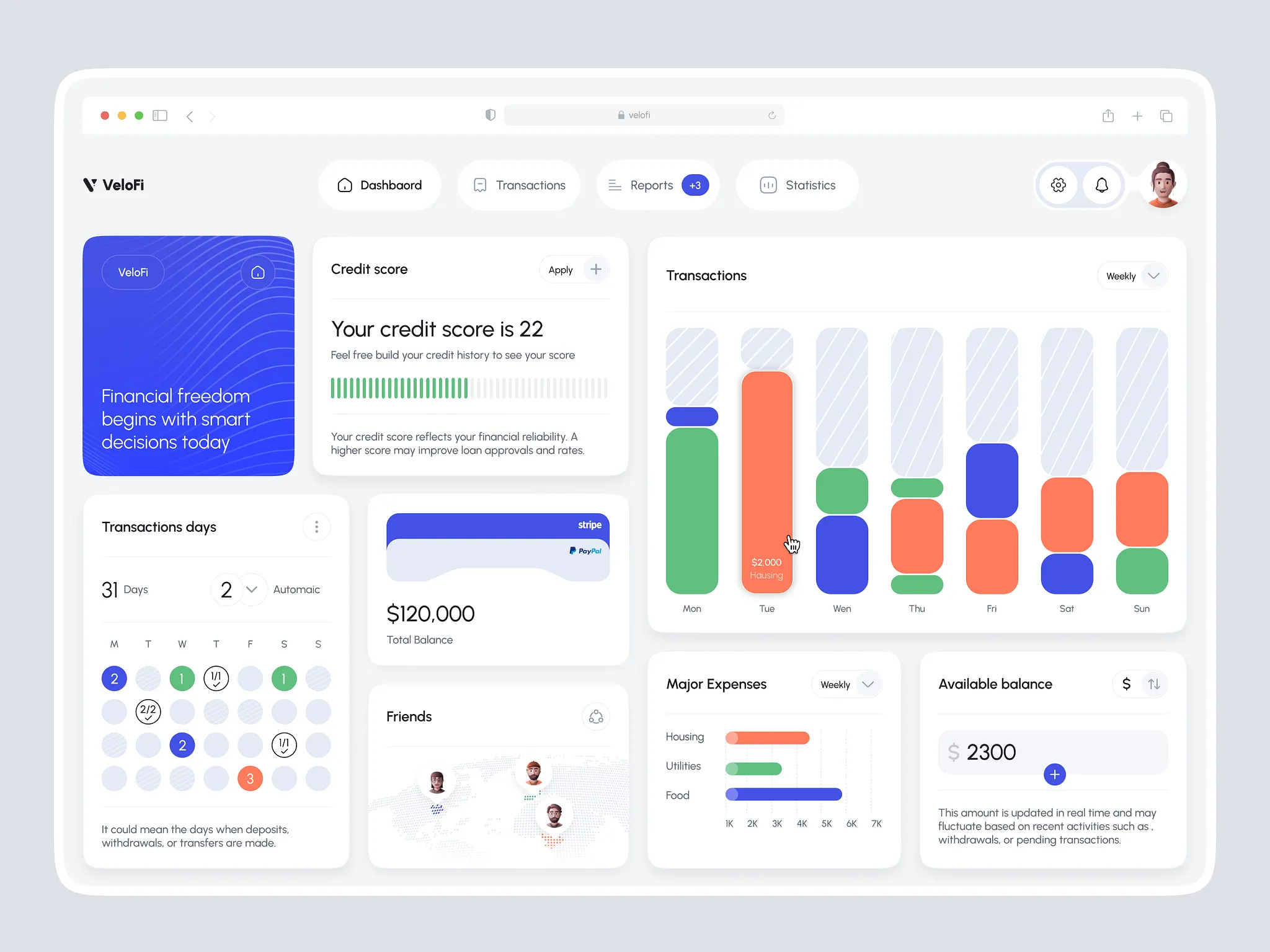
Now imagine the same founder logging into a single dashboard designed around their questions instead of the software.
They can see in one view.
Total revenue and orders for the period
Conversion funnel from visitors to customers
Contribution by channel (paid, organic, social, referrals, walk ins)
Cost per acquisition and return on ad spend
New customers vs returning customers
Average order value and lifetime value
Interactive dashboards like this are associated with around 33% higher decision accuracy and more than 70% of companies that introduced dashboards report better operational efficiency.
Executives using BI dashboards for daily decisions have risen from around 48% to 67% in the past two years, reflecting how routine this way of working is becoming.
For our clients the shift feels like this.
Weekly trading reviews become simple and visual
Teams agree on one version of the truth
Experiments can be designed, measured, and repeated
Strategy can change quickly when the numbers change
This is the gap our dashboards are built to close.
What Our Dashboards Include
Every dashboard we design is different, but the structure follows the same logic.
One Home View For The Whole Business
The top level view shows a simple scorecard of non technical metrics.
Revenue
Number of customers or bookings
Conversion rate
Average order value
Key cost metrics such as ad spend or media cost
Each metric has a clear plain language definition. If we use acronyms like CAC or LTV we include them in the glossary and on hover tooltips so nobody is left guessing.
Channel And Funnel Views
We break down how customers actually find and buy from the business.
Acquisition by channel and campaign
Funnel from impression to click to lead to sale
Drop off points and friction points
Performance of key pages, offers, and forms
Research on BI usage shows that around 75% of dashboards are now interactive, allowing decision makers to drill from high level numbers down into specific segments.
Our designs keep this interaction simple. A founder can click on “Instagram” or “Email” and immediately see the revenue and cost story for that channel.
Customer And Behaviour Views
To understand modern digital customers we track behaviour over time, not just one purchase.
New vs returning customers
Repeat purchase rate
Time between orders
Cohorts by month of first purchase or first visit
Segments by product, location, device, or age group where available
Many SMEs find that a small group of loyal customers drive a disproportionate share of profit. Our dashboards make that visible.
Operations And Experience Views
Where relevant we add panels for operations.
Booking capacity and utilisation for clinics or restaurants
Response times for support tickets
Stock levels and out of stock events for retailers
This keeps the data tied to the real world experience of customers and staff.
How We Centralise And Integrate Data
Behind every simple dashboard is a careful integration process.
Global BI statistics show that around 80% of organisations now collect data from multiple sources for analytics, yet data integration still consumes more than a quarter of project effort.
Our approach focuses on three things.
Owning First Party Data
Wherever possible we help clients move from relying only on platform reports to collecting their own events and customer records.
Website events such as page views, button clicks, form submissions
Transactions from e commerce or booking systems
Customer lists from email platforms and CRMs
This creates a single first party dataset that belongs to the business, not to an advertising platform.
Clean Connections To Key Tools
We then connect major tools into that core dataset.
Web analytics
Advertising platforms
Email and automation tools
Point of sale or booking systems
Customer service platforms
We normalise dates, identifiers, and naming conventions so that “Summer Launch Campaign” means the same thing everywhere.
A Stable Layer For Dashboards
Dashboards then read from this cleaned layer rather than directly from each platform.
Reduces breakage when individual tools change their interface
Makes it easier to add new tools later
Ensures every chart is based on the same numbers
This structure is what allows future steps such as forecasting and machine learning to be added later without rebuilding everything.
Designing Dashboards People Actually Use
Many BI projects fail not because the data is wrong but because the design is confusing. Ease of use is now cited as a critical factor for adoption by nearly 60% of BI users.
We design dashboards to be understandable even for non technical founders.
Plain Language And On Screen Glossaries
We avoid internal jargon and explain any necessary terms.
CAC is explained as “how much it costs on average to get one new customer”
LTV is explained as “the total revenue you expect from a customer over time”
Each dashboard includes a built in glossary so new team members can learn the language quickly.
Clear Visual Hierarchy
Research shows that businesses using strong data visualisation tools see higher engagement and better decision accuracy.
We keep to a small number of chart types and use consistent colours and layout so users can learn the pattern once and apply it everywhere.
Mobile Ready Views
Around 55% of BI users and about 60% of dashboard users now access dashboards on mobile devices.
We create summary views that work on a phone as well as on a large screen so owners can check performance on the move.
Training And Decision Routines
A dashboard is only useful if it is used regularly. We help clients set up simple routines.
Weekly or monthly review meetings
Standard questions to ask the data
Simple experiment logs to link actions and outcomes
This turns the dashboard from a one time deliverable into part of the operating system of the business.
How We Support Clients Beyond The Build
Because we are a strategy firm, we do not stop at visualisation.
We help define which questions the dashboard must answer before we design anything
We run onboarding sessions so every user is confident with the tool
We refine metrics after launch as new campaigns and offers appear
We advise on how to collect better data over time so the dashboards get smarter
For some clients we later add new layers such as forecasting models, marketing mix analysis, or churn prediction. The initial dashboard work is what makes those more advanced steps possible.
“When you pair unexpected and revealing strategy with unrivaled creativity, the potential for impact is limitless.”
Transformational Results And Impact Potential
Across global studies, organisations that embed analytics in their everyday work consistently outperform their peers.
Companies that embed analytics across operations are around 82% more likely to outperform competitors on profitability.
Data powered enterprises enjoy between 30% and 90% better results across customer engagement, revenue, and efficiency metrics than others.
Around 72% of SMEs that use data for decisions report higher satisfaction with their digitalisation results than those that do not.
Executives using dashboards daily for decision making have grown to around 67%, and 72% of organisations credit BI with faster decisions and greater transparency.
In our work with SMEs we see the same pattern. When founders move from instinct and scattered reports to a single, shared dashboard, three things happen quickly.
Strategic focus improves
Budgets are reallocated from vanity channels to those that clearly drive profit. Underperforming campaigns are cut earlier because their impact is visible within days, not months.Teams align around evidence
Marketing, sales, operations, and finance all look at the same numbers. Disagreements shift from opinions to experiments. This reduces internal friction and speeds up execution.Future work becomes easier
Once a business owns clean, structured data, it becomes far simpler to test new offers, expand into new channels, or layer in AI driven models. The dashboard becomes the foundation for every future decision.
For us at Crsndo, this is the core purpose of dashboard projects.
We are not simply delivering charts. We are giving founders a clear, shared view of reality so they can act faster, adapt to new digital customers, and grow with confidence in markets where almost everything else is uncertain.