Hospitality
Rooted In Terroir: Turning Grand Emily Hotel Into A Digital Destination
How we translated a design-led Ukrainian resort into a modern booking experience that converts.
Context And Strategic Question
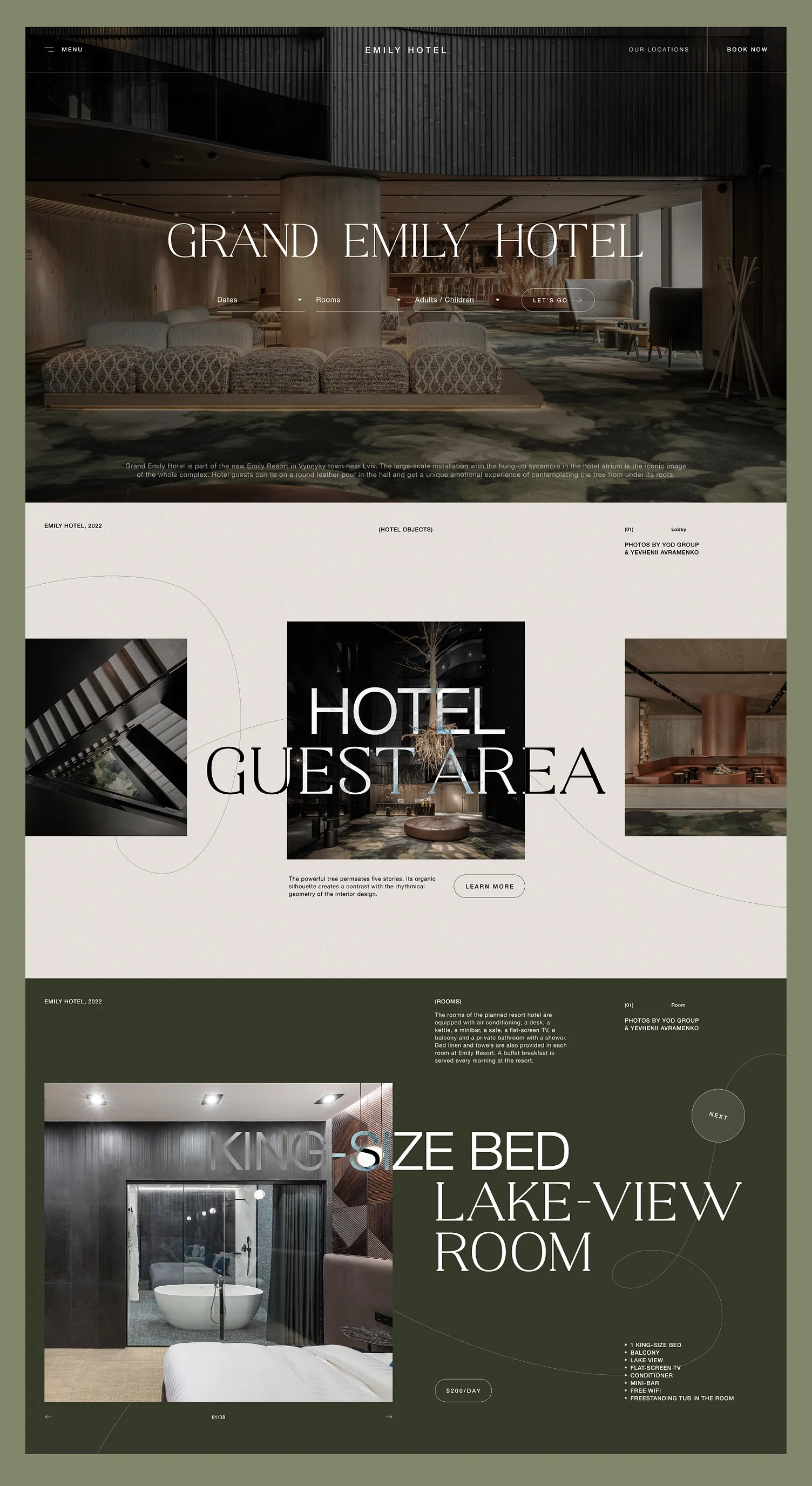
Grand Emily Hotel is part of Emily Resort in Vynnyky, near Lviv. The lobby and guest areas, designed by YOD Group, are built around a suspended sycamore tree, tactile wood cladding, and a warm, nature inspired palette. The interior concept, described as terroir design, is already an attraction in its own right.
The digital experience did not match this standard. Before our engagement, Grand Emily’s website was a generic template with limited photography, little narrative about the resort story, and a booking flow that pushed users to third party channels.
At the same time, guest behaviour has shifted almost entirely online. Over 90% of travellers now research hotels on the internet, and on average they visit 34 different sites and consume 182 pages before finally booking. More than half use mobile devices to research stays, and mobile already represents more than one quarter of all hotel bookings, climbing above 40% for many properties.
High quality visuals and storytelling are no longer “nice to have”. Hotels with rich, professional photography on their digital channels see conversion rates increase by around 15% and can generate up to 60% more bookings than properties with weak visuals. In parallel, 95% of guests read reviews before booking and 76% say user photos influence their decision.
The strategic question for us was clear.
How do we turn Grand Emily’s physical terroir design into a coherent digital journey that:
Shows the hotel at the same emotional level as the interior
Reduces friction and keeps more bookings on the direct site
Captures first party data to support long term positioning and pricing
Design Reality And Digital Gap
Our audit covered the legacy website, online travel agency profiles, review platforms, and social channels. We saw three main gaps.
1. A World Class Lobby, A Template Web Presence
Offline, the hotel offers a five storey atrium, a suspended sycamore, and tactile materials that won design awards. Online, the story was reduced to a handful of compressed images and generic copy. There was no sense of arrival, no connection to the landscape, and no explanation of the terroir philosophy that sets the resort apart.
2. Friction In The Booking Journey
The site was desktop first, with small text, crowded menus, and no clear primary action on mobile. Research shows that although travellers still compare options on desktop, mobile is now the preferred channel for last minute bookings and is used by around 66% of millennials for trip purchases. Grand Emily’s mobile experience made it difficult to select dates, understand room types, or complete a booking without switching device.
3. Missed Opportunity For Direct Revenue And Data
Recent European distribution analysis shows that direct channels represent roughly 29% of hotel online revenue, while a single large OTA can take more than 40%. Grand Emily’s previous site sent users out to intermediaries instead of holding them in a controlled, data rich booking environment. This meant weaker margins, limited ability to personalise offers, and no reliable funnel data for leadership.
Experience Principles And Strategy
From this diagnosis we defined four guiding principles for the new platform.
Reflect The Interior, Not Just List It
The website must feel like the first step into the lobby, not a brochure. Visuals, type, motion, and copy all needed to express the same calm, tactile, and rooted atmosphere as the physical space.
Make Direct Booking The Default
Every page should quietly lead visitors toward direct booking, offering clarity and confidence that match or exceed third party listings.
Design Mobile First For Global Guests
Layouts, interaction patterns, and performance had to work beautifully on mid range phones with slower connections, without losing impact on large screens.
Treat The Site As A Data Asset
From day one the website needed to collect clean behavioural data, so Emily Resort could understand demand patterns, refine pricing, and prepare for future brand campaigns.
Crsndo Intervention
Narrative Architecture And UX
We began with a content and UX blueprint that mirrors a guest’s journey.
Inspiration
Full height photography of the lobby, guest areas, and lake views creates a cinematic first impression, supported by minimal typography and restrained microcopy. This aligns with evidence that rich visual content significantly boosts engagement and booking intent.Orientation
Scannable sections introduce the resort, spa, dining, and conference facilities using simple, concrete language. We avoided generic superlatives and instead anchored descriptions in the terroir story, wood textures, and the sycamore installation.Decision
Room and suite pages combine large, honest photography with clear specifications, floorplans, and inclusions. Users can compare categories quickly without leaving the page, reducing the “tab hopping” behaviour that leads to abandonment.Action
A persistent booking widget appears from the hero down, allowing guests to adjust dates, guests, and room count without breaking their reading flow. On mobile, this collapses into a single primary button that anchors at the bottom of the screen.
Visual System And Brand Translation
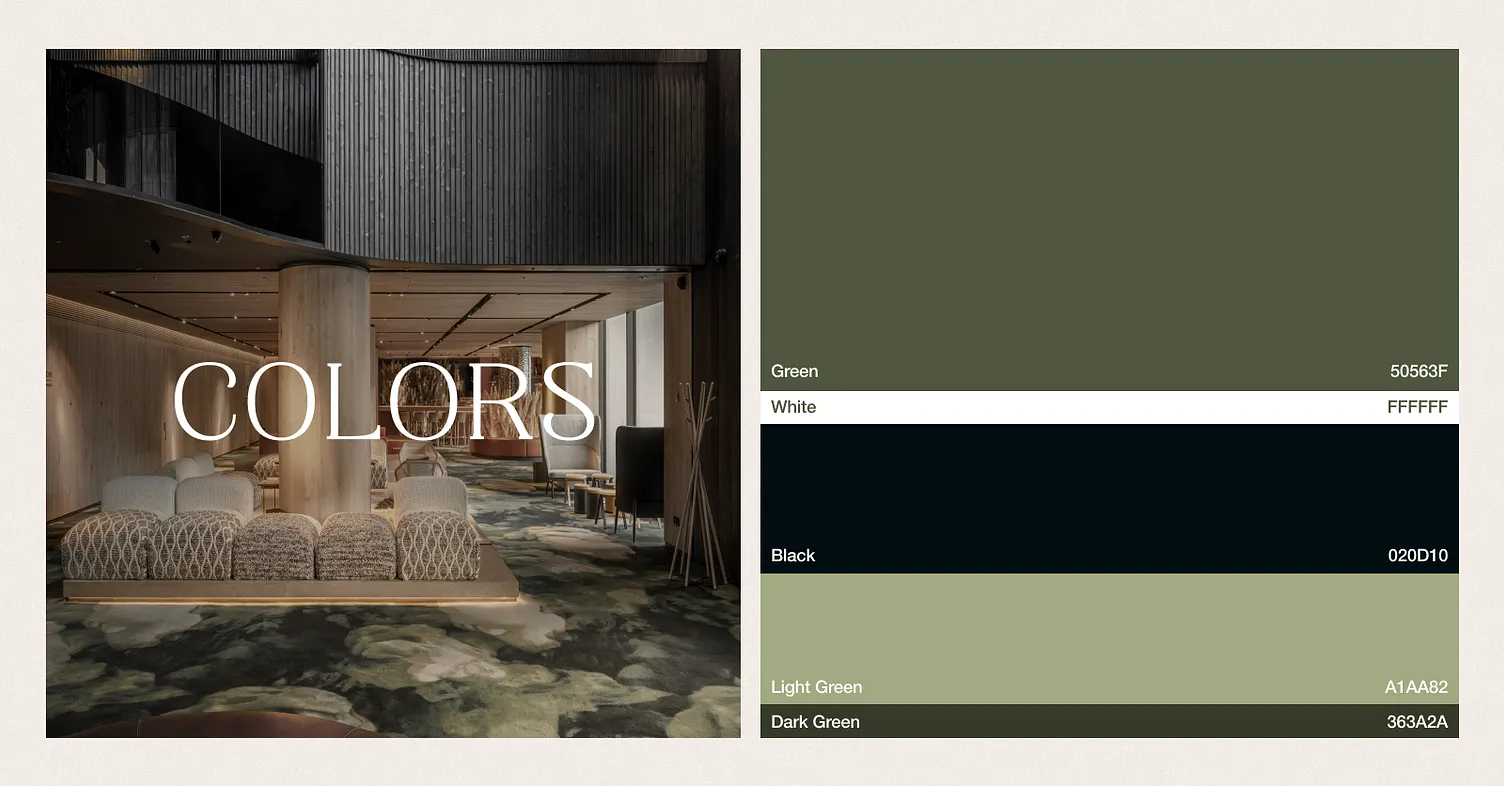
The interior’s palette of deep greens, warm neutrals, and dark wood informed our digital palette. We paired a refined serif for large headings with a neutral sans serif for body copy, echoing on site signage and creating a sense of contemporary quiet.
Key decisions.
Space and rhythm on the site repeat the atrium experience, with generous margins and layered grids instead of crowded modules.
We treated the sycamore installation as the anchor motif, using subtle line illustrations and scroll based transitions that reference branches and rings without literal decoration.
Photography guidelines ensure every new image matches the terroir concept: natural light, visible textures, minimal staging, and human presence used sparingly to maintain timelessness.
Booking Engine Integration And Data Layer
We integrated a modern booking engine with the hotel’s PMS so that availability, pricing, and promotions stay synchronised without manual updates.
From a user perspective.
Direct booking is always the clearest path, with transparent pricing, cancellation policies, and add ons surfaced early.
Guests can bundle spa access, restaurant experiences, and event packages during booking, responding to the experience driven preferences of modern travellers.
From an operations perspective.
Every key action in the booking flow fires structured analytics events, from search to room selection to payment.
We implemented dashboards that track funnel conversion by device, source, country, and language, giving Emily Resort leadership visibility they did not previously have.
Reviews, Social Proof, And Sustainability Story
Given that 95% of guests now read reviews before booking and 70% say they prefer eco friendly hotels even at a higher price, social proof could not sit only on third party sites.
We therefore.
Surface aggregated review scores and selected guest quotes alongside key sections, linking through to detailed independent reviews for transparency.
Highlight the resort’s use of natural materials, regional produce, and its role in supporting the local community, aligning with the rising interest in sustainable, high quality experiences.
“When you pair unexpected and revealing strategy with unrivaled creativity, the potential for impact is limitless.”
Strategic Outcomes And Impact Potential
Our work on Grand Emily Hotel’s website had one objective
Make the digital experience as deliberate and immersive as the physical terroir design that YOD Group created on site.
Direct Bookings As A Core Revenue Stream
Online booking is now the default behaviour for guests. In 2023 an estimated 700,000,000 hotel room bookings were made online worldwide, with younger travellers the most likely to book this way.
At the same time OTAs still dominate many markets. Recent data shows OTAs generate about 43% of online revenue for European hotels and 36% of hotel room bookings globally, while only 21% come through hotel internet booking engines even though direct bookings deliver higher revenue per booking and lower cancellation rates.
The site we designed for Grand Emily focuses relentlessly on direct conversion.
Clear rate and availability views mapped to main room types
Booking calls to action anchored to every major section
Fast mobile flow optimised for guests who decide within minutes
Our performance target is to lift direct online booking share into the high twenties for the hotel within year one and to build a path toward parity with OTAs as brand awareness grows.
Turning Design Awards Into Digital Trust
The Grand Emily lobby and Terra restaurant have won multiple international awards and are widely covered in design media.
Before the website rebuild this recognition lived mainly on third party platforms.
On the new site we turned those credentials into structured proof
Award strip tied to primary booking sections
Deep visual stories of the atrium sycamore installation and the terroir design concept
Editorial modules that link back to articles and design write ups
This gives design aware guests and business event planners a clear reason to choose Grand Emily rather than a generic four star competitor.
Digital Storytelling That Matches The Terroir Concept
YOD’s idea of “terroir design” translates the surrounding hills, lake and sky into material, colour and light.
We mirrored that system online
A restrained colour palette echoing the hotel interiors
Type hierarchy that gives room for large, calm typography and generous breathing space
Image led layouts where each scroll segment feels like walking into another part of the property
This reduces cognitive load and positions Grand Emily alongside international boutique and design led hotels rather than only local competitors.
A Platform Ready For Events And Long Term Growth
Emily Resort includes a 1,500 guest event hall, conference facilities and multiple dining concepts.
The website architecture is therefore built as a system rather than a single brochure
Shared component library so new venues or seasonal offers can be launched quickly
Event enquiry flows that capture group size, technical needs and preferred dates in structured form
Analytics that separate leisure bookings, business travel and event leads so management can see which spaces are driving demand
As international travel demand continues to grow and OTAs increase their marketing spend, hotels that own their story and their booking data will be better placed to protect margin.
For Grand Emily this case study shows our intent.
A digital experience that respects the architecture, protects rate integrity and builds a direct relationship with guests in a market where intermediaries are still gaining power.